
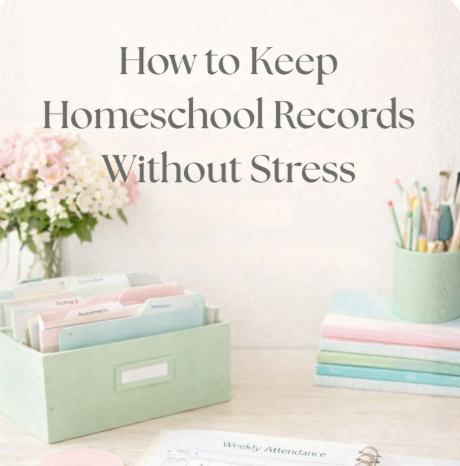
Simple Homeschool Record Keeping System (Without the Overwhelm)
Homeschool record keeping can feel intimidating at first. Many parents worry they are not documenting enough or keeping the “right” records. The truth is, your system does not have to be complicated to be effective.
A simple homeschool record keeping system can help you stay organized, track your child’s progress, and feel confident that you are meeting your state’s requirements. The goal is not perfection. The goal is clarity and peace of mind.
At Hope Happiness Homeschool, we believe that homeschool systems should support families, not stress them out.
Why Record Keeping Matters
Keeping homeschool records serves several important purposes.
First, it helps you track your child’s learning over time. When you look back at what your child has completed, it becomes easier to see progress that may not feel obvious day to day.
Second, records can help if your state requires documentation of homeschooling.
Third, it allows you to celebrate growth. Looking through past work can remind both you and your child how far they have come.
Record keeping does not have to mean stacks of paperwork. A few simple systems can work beautifully.
A Simple Homeschool Record Keeping System
Here is a gentle, practical system many homeschool families use.
1. Attendance Tracking
Some states require attendance records. Even if yours does not, keeping a simple attendance log can be helpful.
This can be as simple as:
• a printed attendance sheet
• a planner where you mark learning days
• a digital calendar
You only need to track that learning happened. It does not need to be complicated.
2. Subject Progress Notes
Keep a simple record of what your child is learning in each subject.
You can do this by writing short notes such as:
Math – Fractions practice
Science – Watched documentary about ocean life
Reading – Completed two chapters of a novel
Writing – Journal entry about animals
These notes help you see progress without needing to save every worksheet.
3. Work Samples
Instead of saving everything, choose a few pieces of work each month.
Examples include:
• writing assignments
• art projects
• science experiments
• book reports
These samples create a small portfolio that shows your child’s development throughout the year.
4. Yearly Summary
At the end of the year, write a short summary describing what your child learned.
This might include:
• subjects studied
• favorite projects
• new skills developed
This summary becomes a helpful snapshot of your homeschool year.
Keep It Simple
The most important thing to remember is that your record keeping system should serve you.
You do not need perfect binders, elaborate spreadsheets, or complicated forms. A simple notebook, planner, or folder system can work just as well.
Homeschooling is about growth, curiosity, and connection. Your records are simply a way to capture that journey.
Encouragement for Parents
If record keeping feels overwhelming, take a deep breath.
You are already doing the most important work by showing up for your child each day.
A simple system is more than enough.
Pin This for Later 📌
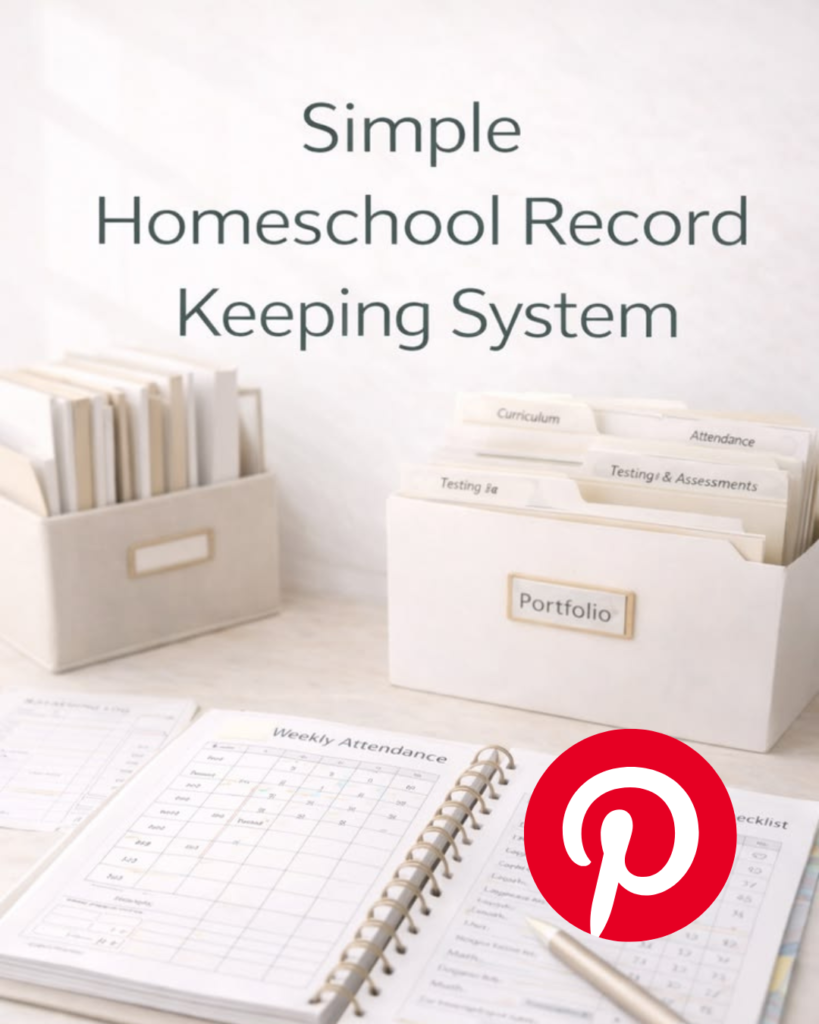
If you found this helpful, consider saving this guide for later so you can come back to it when planning your homeschool year.
Looking for an even simpler way to stay organized?
My Gentle Homeschool Reset Kit includes printable planning pages designed to help parents simplify their homeschool routine.
👉 You can explore it here.
💛